Analysing the UK’s PIEs – How many are there, and who are they?
The UK's PIEs are theoretically among the economy's most important corporate entities - but who are they, and exactly how many of them are there? The CPIA takes a look...
Some of the UK’s largest companies are subject to enhanced audit and governance requirements under the Public Interest Entity (PIE) framework. This framework operates on the principle that there should be greater transparency and accountability for the entities whose financial reporting has a significant public impact.
As such, you might expect there to be a straightforward list of entities within the UK’s PIE framework to help keep track of them. In reality, no single definitive register is publicly available. Instead, PIE status is determined by legal and regulatory criteria, with entities entering and leaving the population as their circumstances change. New listings, delistings, changes in regulatory authorisation and corporate restructuring can all affect whether an organisation falls within the scope of the PIE framework. As a result, the population of UK PIEs is inherently dynamic.
This raises a simple but important question: what does the current UK PIE population actually look like?
This analysis estimates the size and composition of the UK PIE population using publicly available London Stock Exchange (LSE) reports on instruments admitted to trading and Prudential Regulation Authority (PRA) registers of banks (credit institutions which are Capital Requirements Regulation (CRR) firms within the meaning of Article 4(1)(2A) of the UK CRR)), building societies and Solvency II insurers. It then analyses the population by category, sector and place of incorporation before comparing the results with reported PIE populations in selected European jurisdictions.
For the purposes of this analysis, we considered only issuers of bonds and shares admitted to trading on the LSE main market. Issuers of other instruments admitted to trading on the main market were excluded. The available reports do not provide sufficiently clear evidence to determine whether those instruments constitute transferable securities admitted to trading on a UK regulated market. As a result, further instrument-specific analysis would be required to assess whether the issuer falls within the UK PIE definition.
The resulting figures should therefore be read as an estimate based on the scope, classifications and publicly available information described above, rather than as a definitive count of all UK PIEs.
The UK PIE population
In the UK, PIEs comprise issuers whose transferable securities are admitted to trading on a UK regulated market, credit institutions – including banks and building societies – and certain insurance undertakings. Based on publicly available information as at September 2026, our analysis identifies as many as 2,152 UK PIEs across these categories [1].
The largest category is represented by entities with securities admitted to trading on a UK regulated market, totalling 1,460 entities [2]. This is followed by 148 PRA-regulated banks, 42 PRA-regulated building societies and the vast majority of the 502 PRA-regulated insurers. Even in this effort to map out the PIEs, an element of uncertainty remains unavoidable: non-Solvency II insurers are not PIEs, but there is no publicly available list of these insurers. These non-Solvency II insurers typically include some friendly societies, mutual insurers, life insurers and insurers with small premium holdings. These represent a small minority of UK insurers.
Care was taken to avoid double counting entities that met more than one PIE criterion. For example, a total of 35 entities appeared both on the LSE reports and within PRA registers and were counted once only.
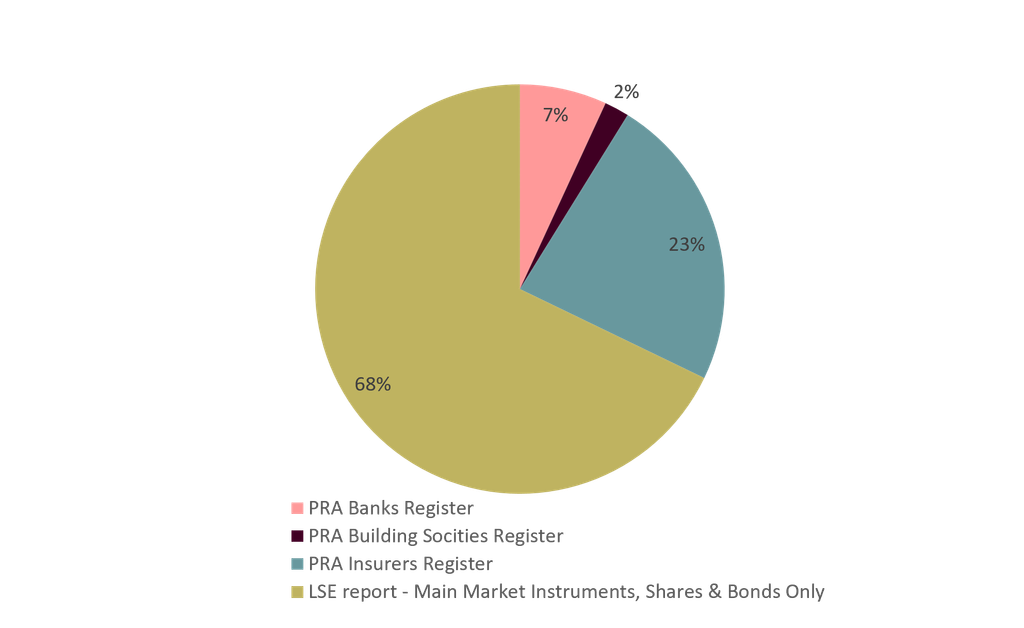
UK PIEs, September 2026
The most immediate observation is the dominance of issuers with either bonds or shares admitted to trading on a UK regulated market. Almost two-thirds of all PIEs identified in this analysis were drawn from the LSE reports, while prudentially regulated institutions account for the remainder. This highlights the significant role of capital markets in shaping the UK’s PIE landscape and demonstrates that the population extends well beyond banks and insurers.
Who are the PIEs?
The four broad categories of PIEs only tell us so much, and it’s worth digging deeper. For example, of the 1,460 entities with listed bonds or shares identified for this analysis, only a minority comprise the large listed companies that typically feature in discussions relating to corporate reporting and audit regulation. Collectively, the FTSE100, FTSE250 and FTSE Small Cap companies represent 535 entities, or 38% of the total listed market.
The remaining listed PIEs comprise a diverse mix of debt issuers, investment funds and other entities with securities admitted to trading on UK regulated markets.
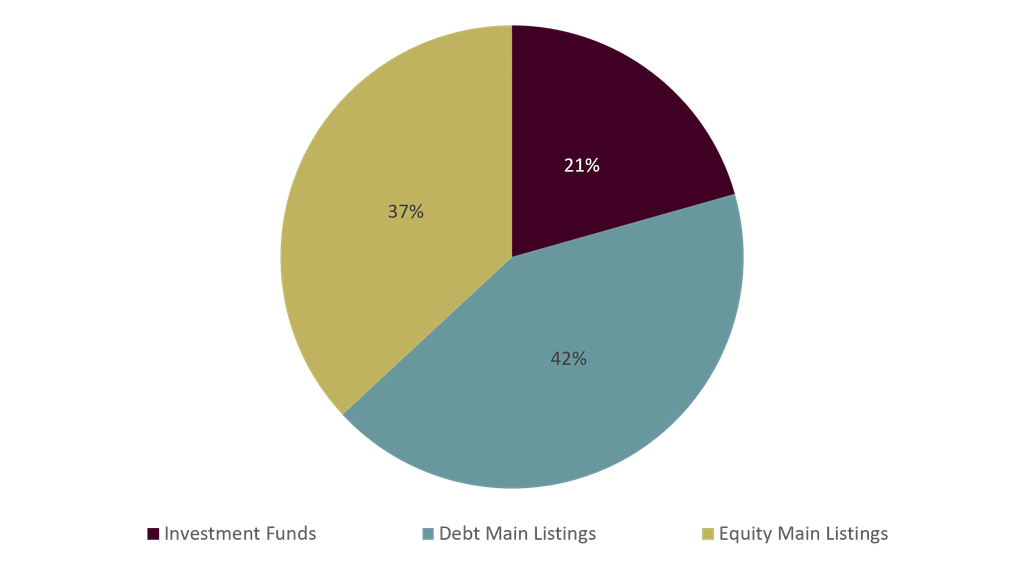
UK PIEs, by type, September 2026
One notable characteristic of the listed PIE population is the significant number of debt issuers. Our analysis identified 620 entities whose inclusion in the population of UK PIEs arises principally from the admission of debt instruments to trading. These entities include banks incorporated outside the UK authorised to accept deposits through a branch in the UK (i.e. not a CRR firm), financing vehicles, utility issuers, housing sector funding vehicles, infrastructure companies, securitisation structures and a range of overseas issuers accessing UK capital markets.
Another component of the listed population comprises closed-ended investment funds. The analysis identified approximately 301 of these entities, including a broad range of investment trusts focused on equities, infrastructure, private equity, real estate, renewable energy and specialist asset classes. These entities represent a longstanding feature of UK capital markets.
Taken together, these findings underline the fact that the listed component of the population of UK PIEs extends well beyond traditional equity-listed operating companies. Indeed, debt issuers and closed-ended investment funds together account for approximately two-thirds of the listed PIE population. While public attention often focuses on FTSE constituents, a substantial proportion of listed PIEs comprise debt issuers and investment vehicles that access public markets for financing and investment purposes.
Sector composition
Unlike listed entities, organisations registered as banks (CRR firms, as explained above), building societies and insurers included through the PRA registers retain their PIE classification whether they’re listed or not.
Analysis of the listed PIE population shows that financial services-related activities account for a significant proportion of listed PIEs, comprising 821 entities (more than half of all listed PIEs). This group includes banks incorporated outside the UK authorised to accept deposits through a branch in the UK (i.e. not a CRR firm), investment management entities, financing vehicles, treasury companies, securitisation structures, specialist lenders and other financial market participants.
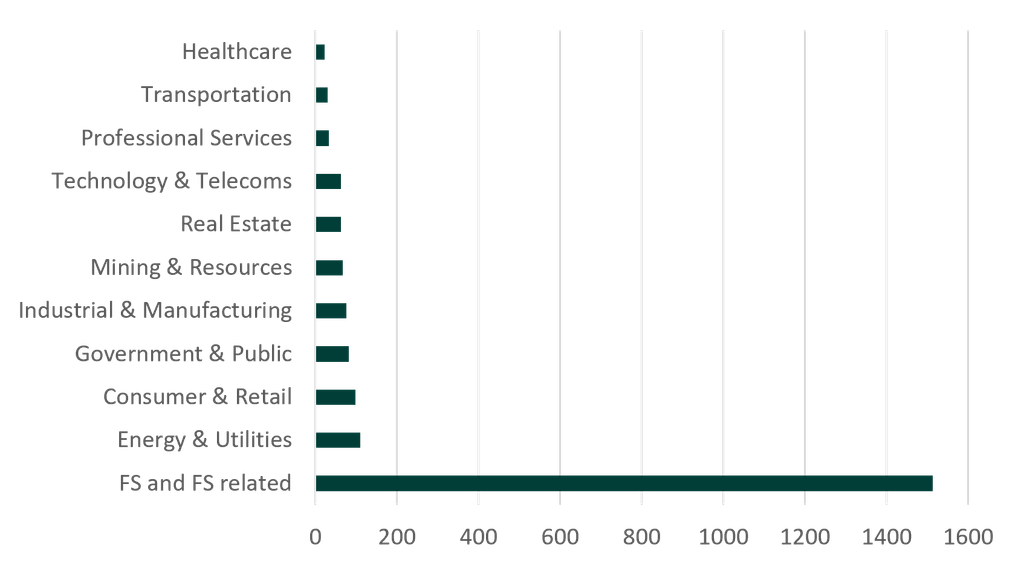
UK PIEs, by sector, September 2026
When the 692 unlisted banks, insurers, and building societies are added to the mix, the importance of financial services becomes even more pronounced. Overall, the 1,513 financial services PIEs represent approximately 70% of the total UK PIE population.
Outside financial services, the UK’s largest PIE sectors are energy and utilities (109 entities), consumer and retail businesses (98 entities), government and public sector bodies (81 entities), and industrial and manufacturing companies (76 entities). Other notable sectors include mining and resources (67 entities), real estate (63 entities), technology and telecommunications (62 entities), professional services (32 entities), transportation (29 entities), and healthcare (22 entities).
International Composition
A distinctive feature of the population of UK PIEs is its international composition. Of the roughly 2,152 entities identified, 726 are incorporated outside the UK, meaning that 34% of the population comprises foreign-incorporated entities.
This is relevant from an audit oversight perspective because the population of UK PIEs does not necessarily coincide with the population of PIEs audited by UK statutory auditors. Overseas issuers whose transferable securities are admitted to trading on a UK regulated market may instead be audited by firms registered under the UK’s Third Country Auditor (TCA) regime. This regime provides a framework for the oversight of these audits, which can include, where appropriate, reliance on overseas audit oversight arrangements recognised as equivalent to the UK framework.
The significance of this international component becomes even more apparent when viewed in a European context. Studies conducted in other European jurisdictions [3] have reported approximate PIE populations of 1,050 entities in Germany, 1,426 in Spain and 1,498 in France. Against this backdrop, the UK’s population of around 2,152 entities appears notably larger.
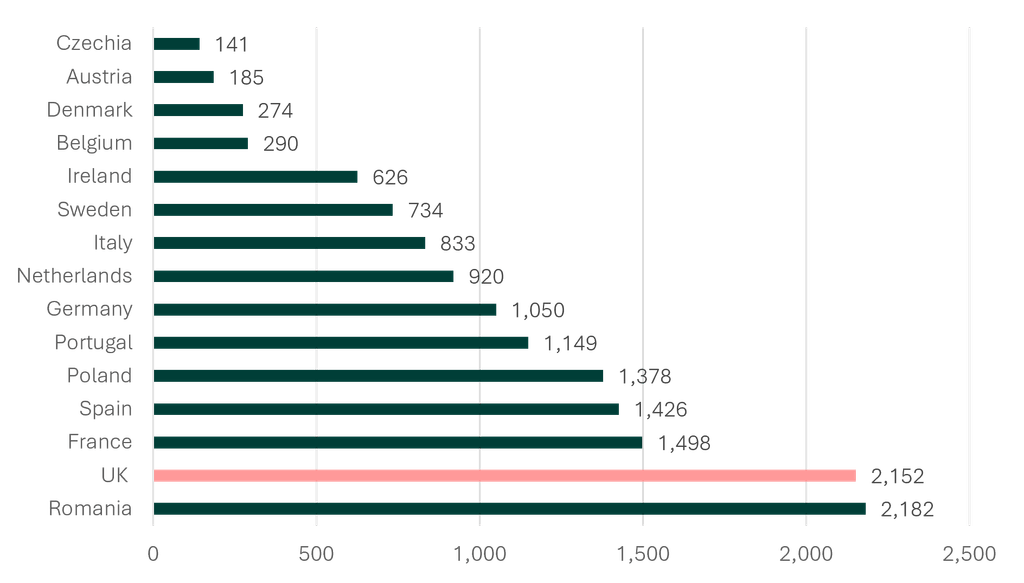
PIEs by Country
A substantial part of this difference appears to be explained by foreign-incorporated entities. Excluding overseas organisations, the UK population would reduce from around 2,152 to 1,426 entities, much closer to the populations observed in comparable European jurisdictions. The UK’s larger PIE population therefore reflects not only its domestic economy and financial sector, but also the role of UK capital markets as an international venue for debt and equity issuance.
Reflections on the current UK PIE perimeter
The current PIE perimeter provides a broad basis for identifying entities in need of enhanced audit and governance requirements. But our analysis also highlights a number of issues with the current approach.
First, PIE status is determined at the level of individual legal entities rather than corporate groups. A corporate group may therefore contain a mixture of PIE and non-PIE entities: a listed parent company, a PRA-regulated subsidiary and several non-PIE operating companies may all coexist within the same structure. Consequently, the population of roughly 2,152 PIEs should not be interpreted as representing 2,152 separate corporate groups.
Secondly, questions remain as to whether all entities of significant public interest are captured by the current framework. This is an issue we’ve looked at before. A range of organisations, including large private companies, universities, housing associations, pension schemes, infrastructure operators and certain public-sector bodies, may have considerable economic importance while remaining outside the statutory UK PIE definition. Their exclusion raises questions as to whether the current framework adequately aligns enhanced oversight with the entities whose failure could have the greatest consequences for the public and wider economy.
Conversely, the current population may also include smaller entities whose scale, complexity or wider economic significance makes their classification as PIEs questionable. These include small debt-issuing vehicles, closed-ended investment funds with limited operations, or overseas issuers with only a narrow UK market presence.
A related issue arises in relation to companies whose securities are admitted to trading on the Alternative Investment Market (AIM). AIM admission does not of itself confer PIE status. However, an AIM-listed company may still qualify as a PIE where it falls within another statutory category, such as a credit institution or insurance undertaking. In addition, some larger AIM-listed companies are classified by the Financial Reporting Council (FRC) as Other Entities of Public Interest (OEPIs) and are therefore subject to certain PIE-like requirements, particularly in relation to auditor independence and restrictions on non-audit services. This shows a regulatory recognition that public interest may extend beyond the statutory PIE definition. It also creates a more complex framework in which differing categories of public-interest entities are subject to different levels of oversight, despite possibly being of similar levels of public interest.
As the Government considers how to modernise the UK’s corporate reporting framework, it should review the scope of companies subject to enhanced corporate reporting requirements. Given that the definition of a Public Interest Entity (PIE) determines which entities fall within that scope, revisiting the definition to ensure it genuinely reflects the public interest should be a key part of the consultation.
Footnotes
[1] For the purposes of this article, the listed PIE population comprises entities identified from publicly available London Stock Exchange (LSE) reports on instruments admitted to trading on the Main Market, where the issuer’s securities are admitted to trading on a UK regulated market and therefore fall within the UK Public Interest Entity (PIE) definition.
[2] This population considers only issuers of bonds and shares admitted to trading on the LSE Main Market. Other instruments admitted to trading on the Main Market were excluded because their admission does not necessarily provide sufficient evidence to conclude that the issuer falls within the UK Public Interest Entity (PIE) definition and may require additional instrument-specific assessment. Based on this approach, an additional 272 entities were identified as potential UK PIEs.
[3] ICAC–ASEPUC Study (2023), Extent of the Definition of Public Interest Entities (PIEs) in Other Countries, prepared by the Instituto de Contabilidad y Auditoría de Cuentas (ICAC) and the Asociación Española de Profesores Universitarios de Contabilidad (ASEPUC).
